Certified but Not Hired: How to Close the Experience Gap in Tech
Have you ever wondered why so many skilled and certified professionals still struggle to land tech jobs?
Published on November 30, 2025
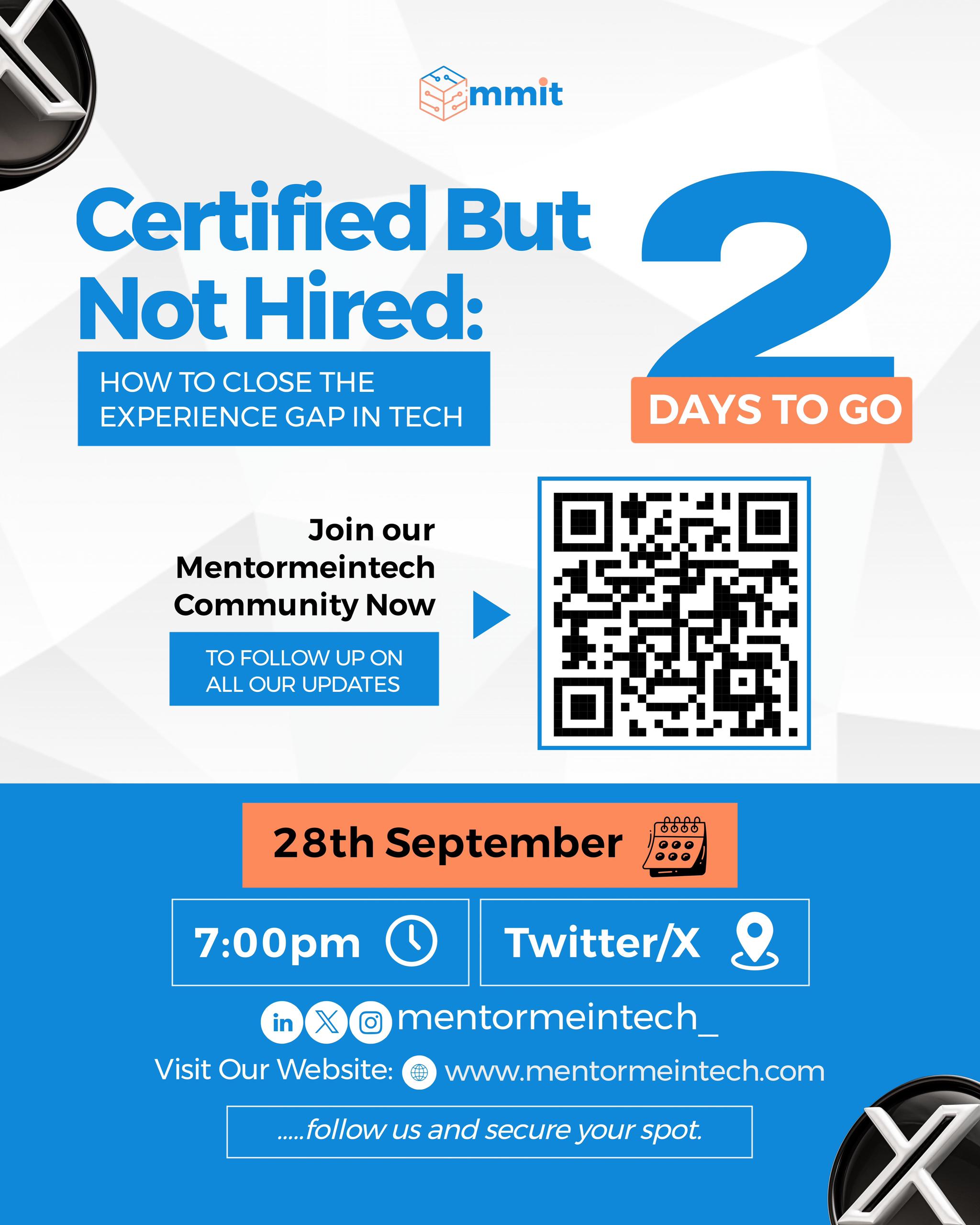
Have you ever wondered why so many skilled and certified professionals still struggle to land tech jobs? You’ve taken the courses, earned the badges, maybe even aced a few coding challenges—yet, the job offers just don’t seem to come.
If this sounds like you, you’re not alone. At MentorMeInTech (MMIT), we’ve met hundreds of aspiring professionals who’ve done everything “right” but still face one big hurdle—the experience gap. To help unpack this challenge, we spoke with Robert Kehinde, Chief Information Officer at Anchor Bridge and a seasoned full-stack engineer who has mentored over 200 developers. In this conversation, Robert shared practical ways tech professionals can turn certifications into tangible opportunities.
Why Certificates Don’t Always Guarantee Tech Jobs
“Certificates are now proof of knowledge, not proof of experience.” — Robert Kehinde.
Certifications are great—they show commitment and knowledge. But here’s the truth: proof of knowledge isn’t proof of experience. Many new professionals believe certifications automatically open doors to employment. But in today’s market, employers want more than theory—they want to see how you apply what you’ve learned. Robert explained it simply: “Employers don’t just hire skill; they hire people who can apply skill.” Education gives you the foundation. Experience gives you the story. And that story is what hiring managers want to see.
Building Proof of Work Without a Job Title
“Start small, build publicly, and stay visible.”— Robert Kehinde.
You don’t need a full-time job to start building experience. Work on personal projects, volunteer for open-source communities, or join hands-on mentorship programs like MMIT. These platforms don’t just sharpen your skills—they build your proof of work.
He shared his own journey: “After leaving school, I jumped on personal projects, shared my progress online, and that visibility brought me opportunities.” LinkedIn became his portfolio. Each post, each project update, was a window for recruiters to see what he could do. “For my latest job, I didn’t even submit a CV—they reached out because my work was already visible.”
The Power of Sub-Skills in Tech Growth
Tech skills may open the door—but sub-skills help you stay in the room. Robert emphasizes that communication, teamwork, and problem-solving can set you apart. “Tech isn’t a solo sport,” he says. “Employers need people who can collaborate, communicate, and think critically.” He recalls being invited to speak during his university days—not because of his coding skills, but because of his communication skills. That ability later became a career advantage.
So while you’re improving your technical stack, build your human stack too: Learn to explain your work, communicate clearly, collaborate effectively, and take feedback with maturity. These are the skills that turn good developers into great professionals.
Strategic Networking: It’s More Than Sending Job Applications
“Don’t just apply—connect.” — Robert Kehinde.
Networking isn’t just about who you know; it’s about who sees your work and believes in it. Robert encourages tech professionals to network with purpose: Follow companies, connect with decision-makers, engage meaningfully in conversations, and be consistent.
Miss Bukola, one of the participants in the session, shared how she landed a job through consistent LinkedIn engagement rather than a formal application. “Some opportunities come through divine timing and the right relationships,” she added. The key is visibility + relationship + consistency.
From Stuck to Strategic: When to Pivot
Feeling stuck? Still collecting certificates, but not getting results? Robert’s advice is simple and powerful: “Stop collecting more certificates—start building with what you have.” Partnerships, collaborations, and projects are where your learning becomes visible. Each project—no matter how small—is proof that you can apply your skills in the real world. Remember, you don’t grow in silence; you grow in visibility.
Turning Knowledge Into Experience
Certifications are valuable, but they’re only the starting point. Experience is what transforms knowledge into opportunity. From Robert’s insights, one thing stands out: visibility, collaboration, and consistency are your best strategies for breaking into tech.
So, don’t just learn tech—live it. Build something. Share it. Engage. Grow. Your proof of experience will always be your most powerful certificate.